OFFICE.DWG
OFFICE.DWG
The DWG office was conceived as a spatial manifesto of architectural work – at once a workspace, laboratory, workshop and platform for the exchange of ideas. The intention was not to design a standardized office, but to create a creative capsule in which architectural thought can emerge, circulate and materialize.
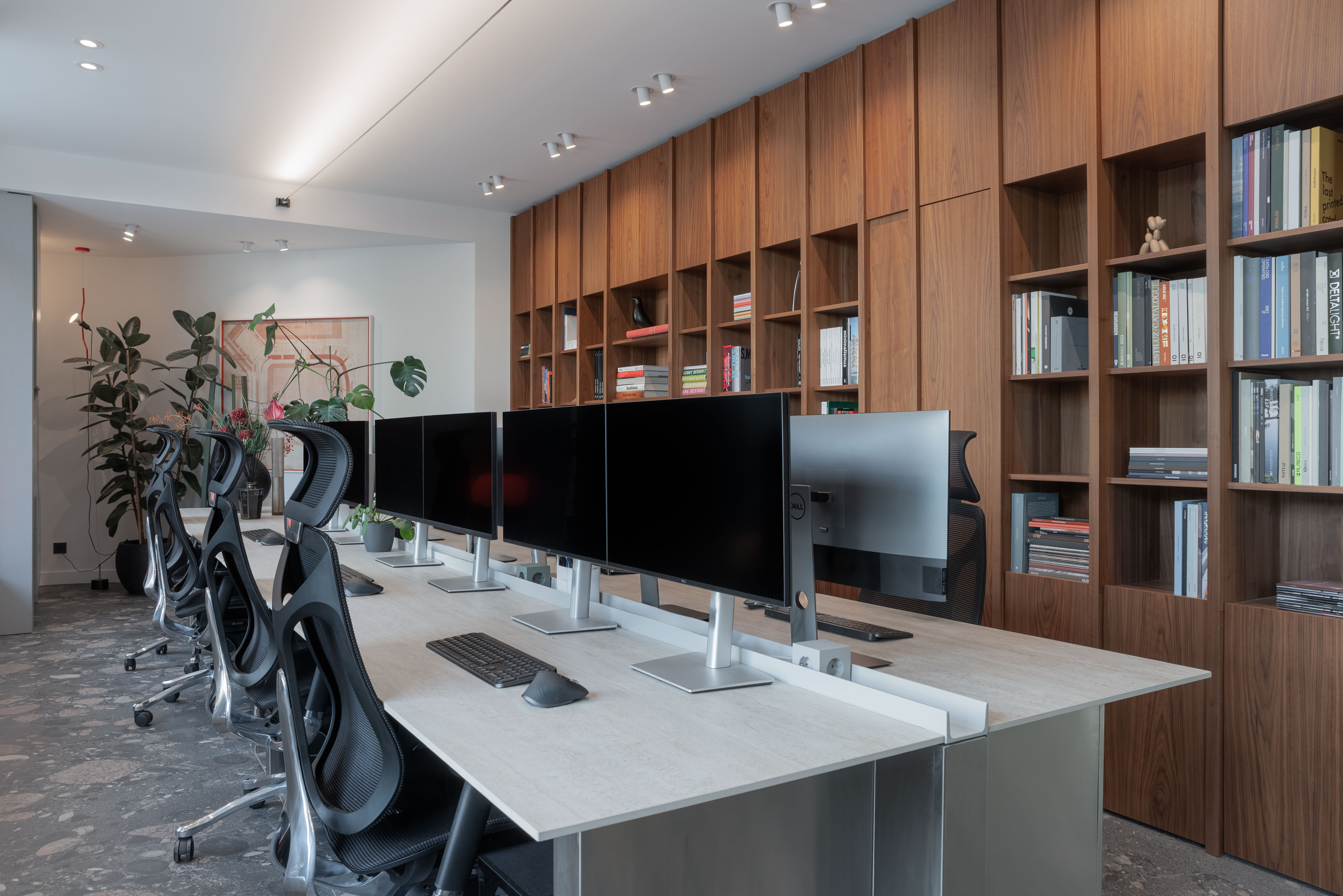
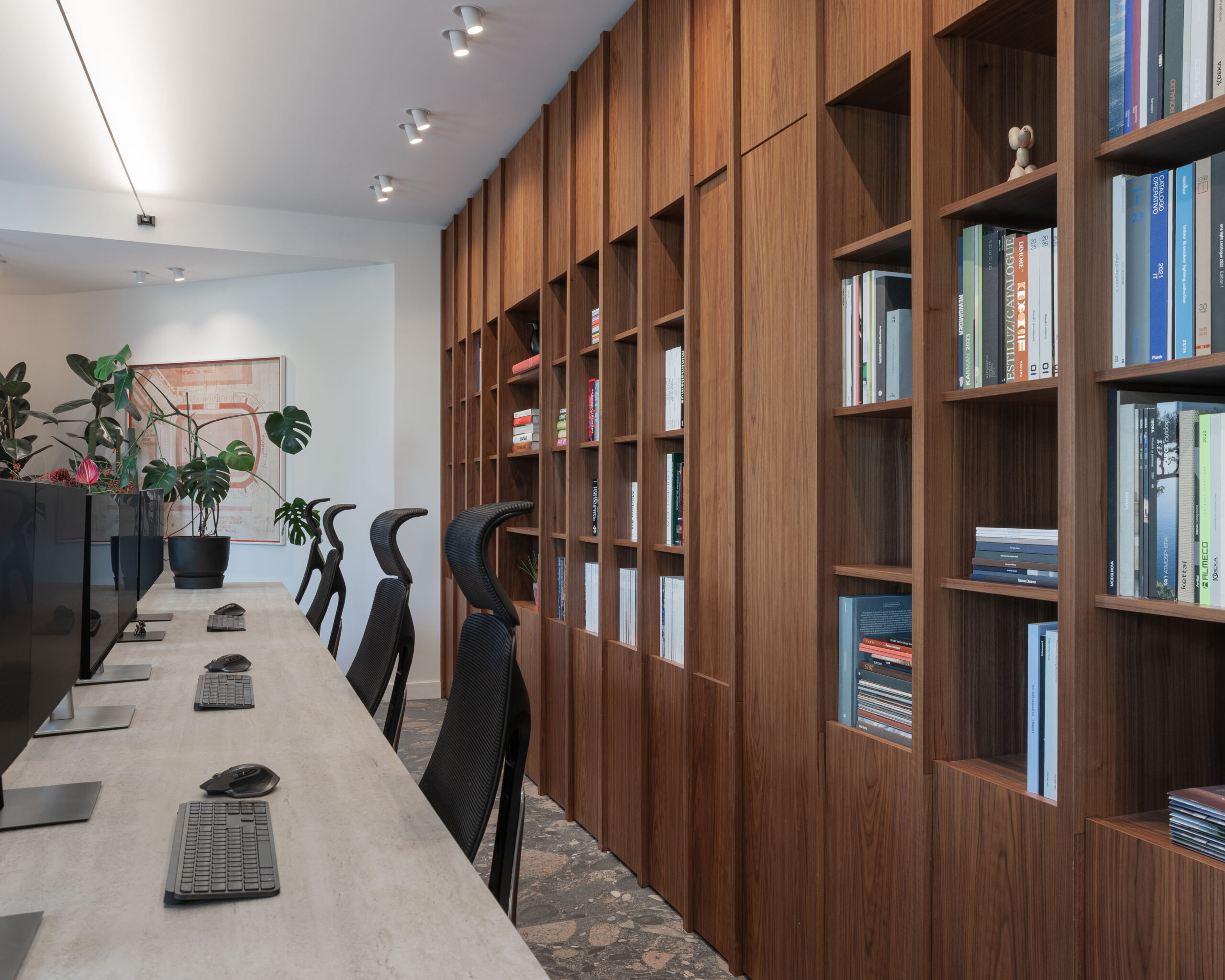
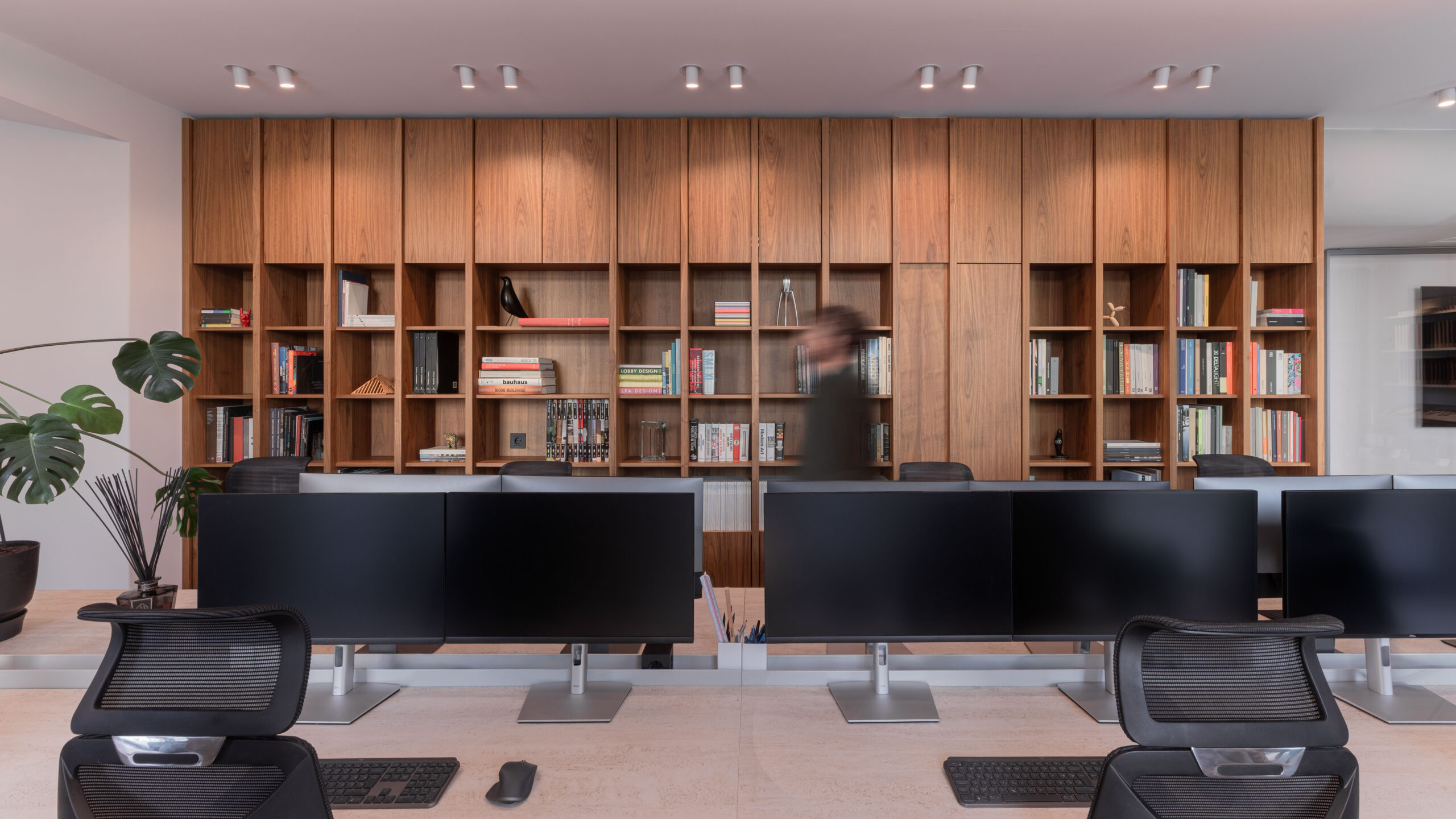
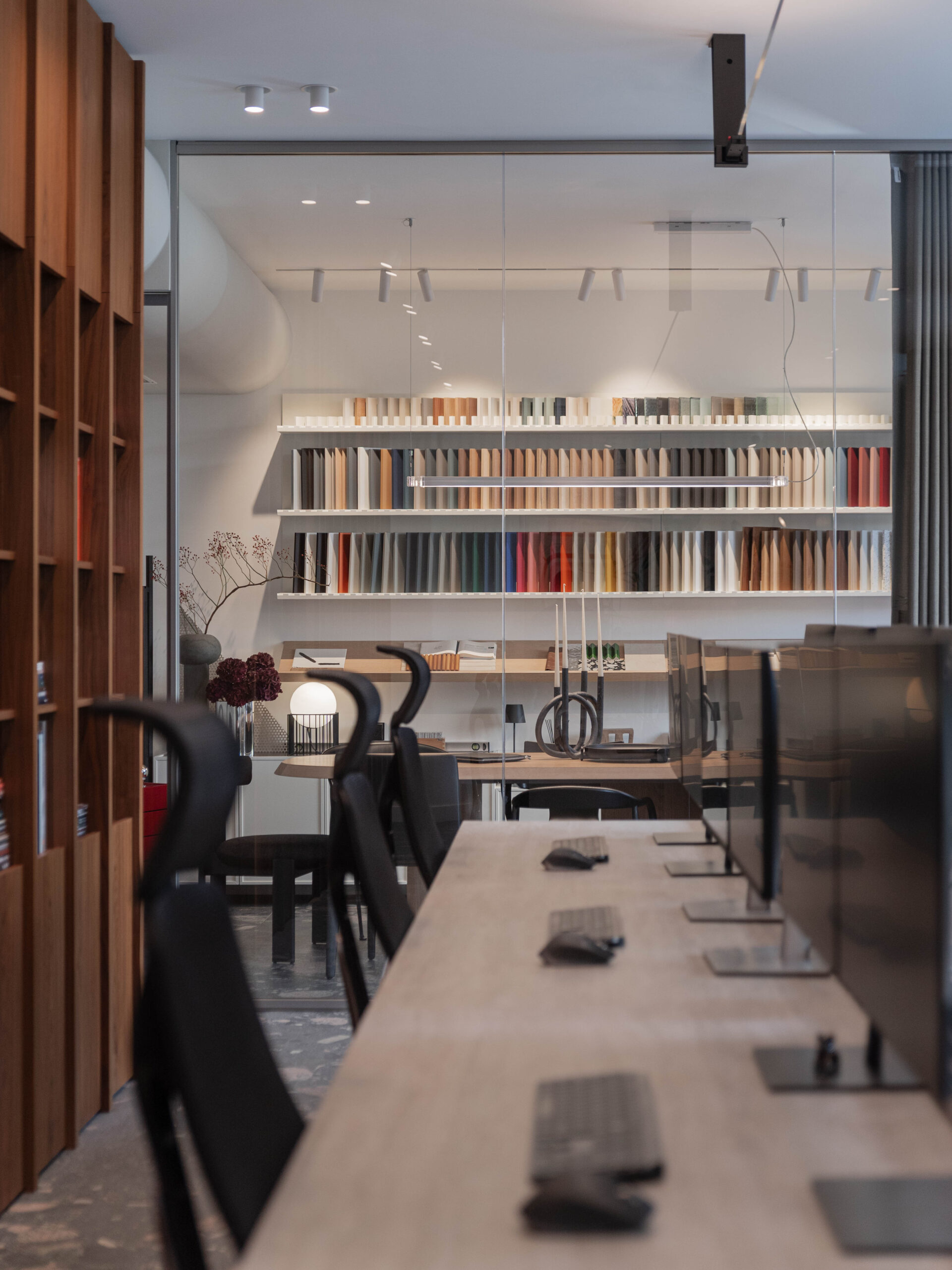
The central element of the space is a monumental communal table with a travertine top, resting on massive stainless steel legs. This table with eight workstations is designed as a core of communication: the architects are positioned towards the center, encouraging dialogue, spontaneity and collective thinking – the basic tools of the architectural process.
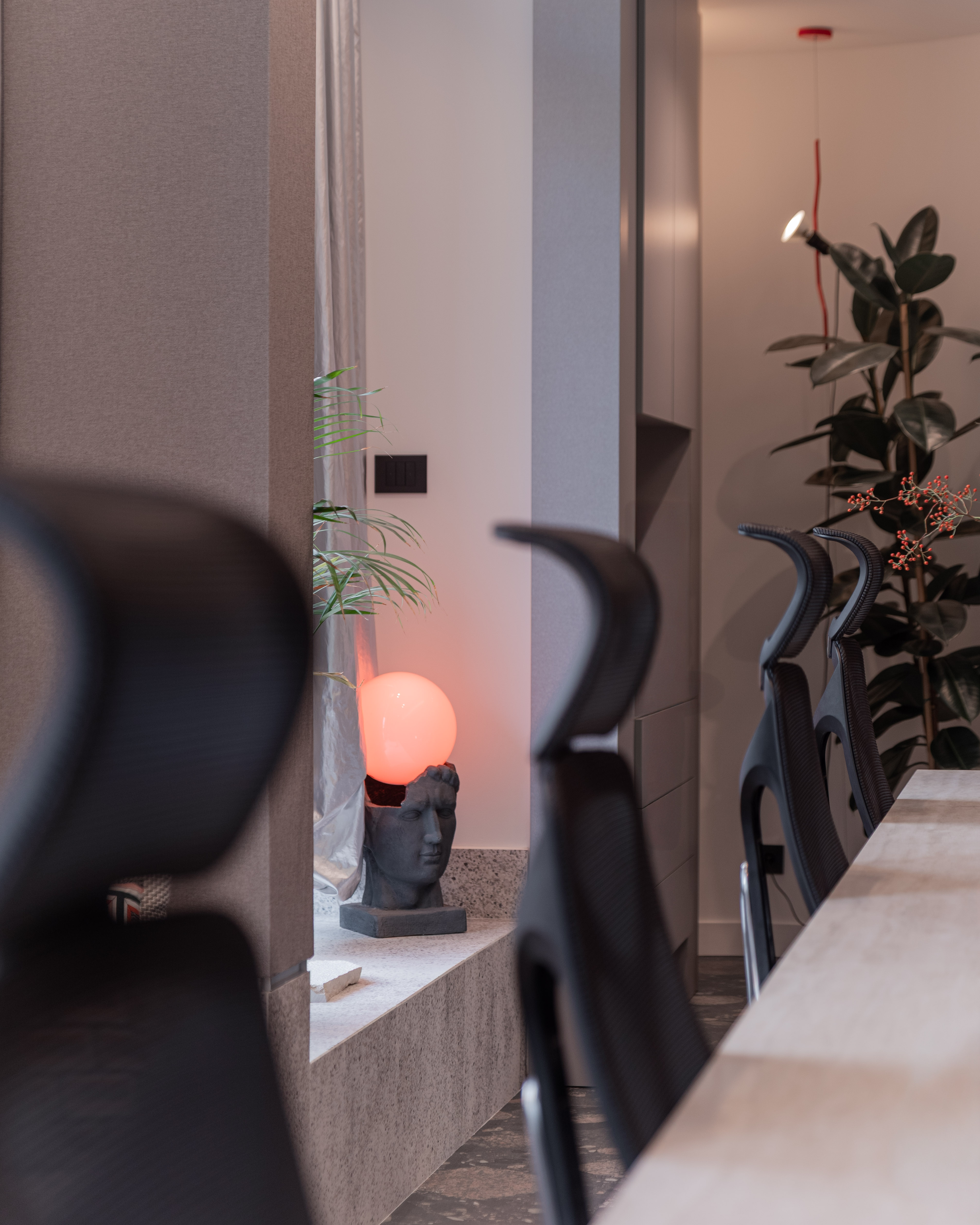
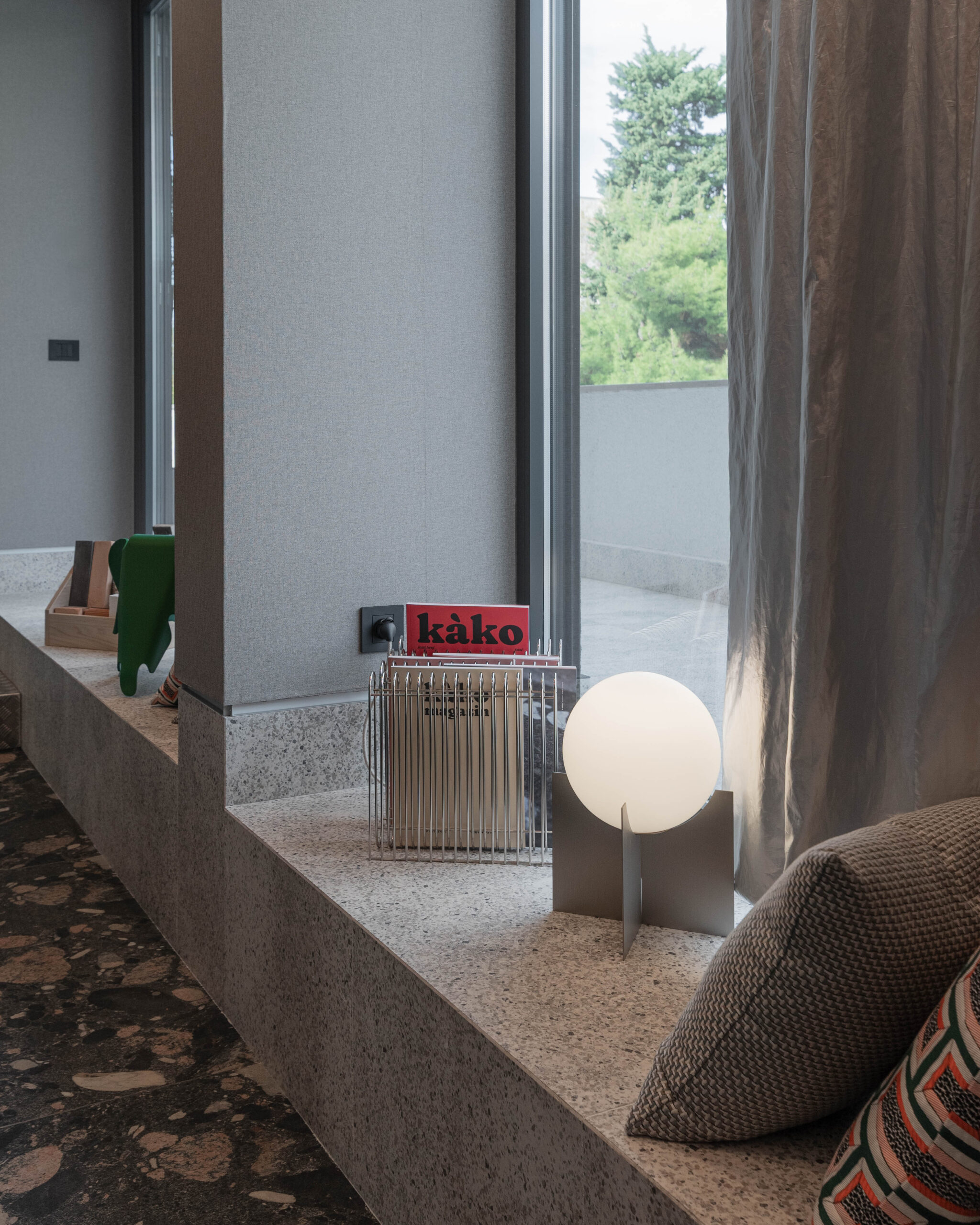
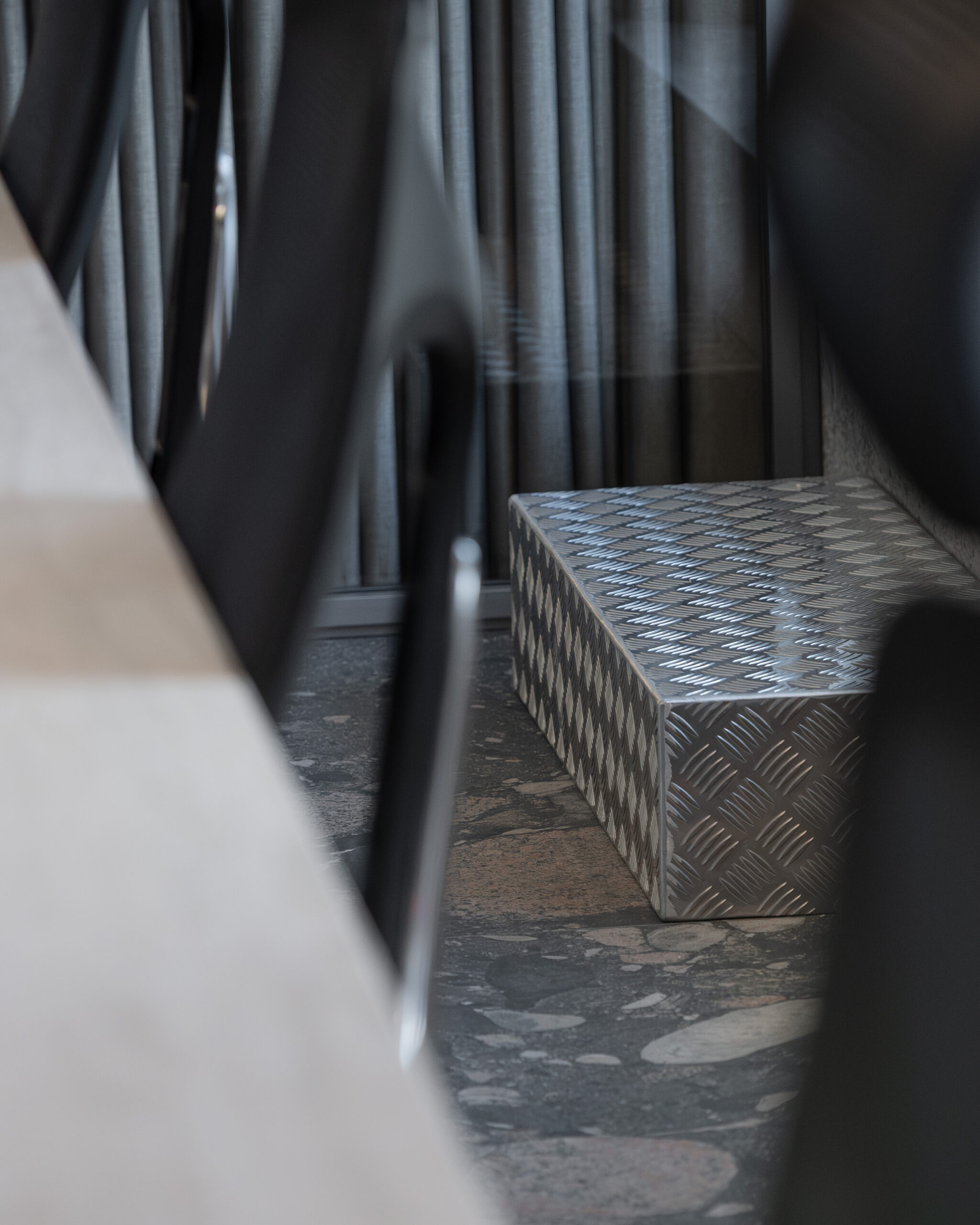
The office is recessed half a meter below the level of the northern terrace, which allows the terrace, treated as an extended multipurpose bench, to enter the interior. The bench becomes a hybrid: a space for consultations, presentations, storage and living, and the continuity of materials blurs the boundary between inside and outside.
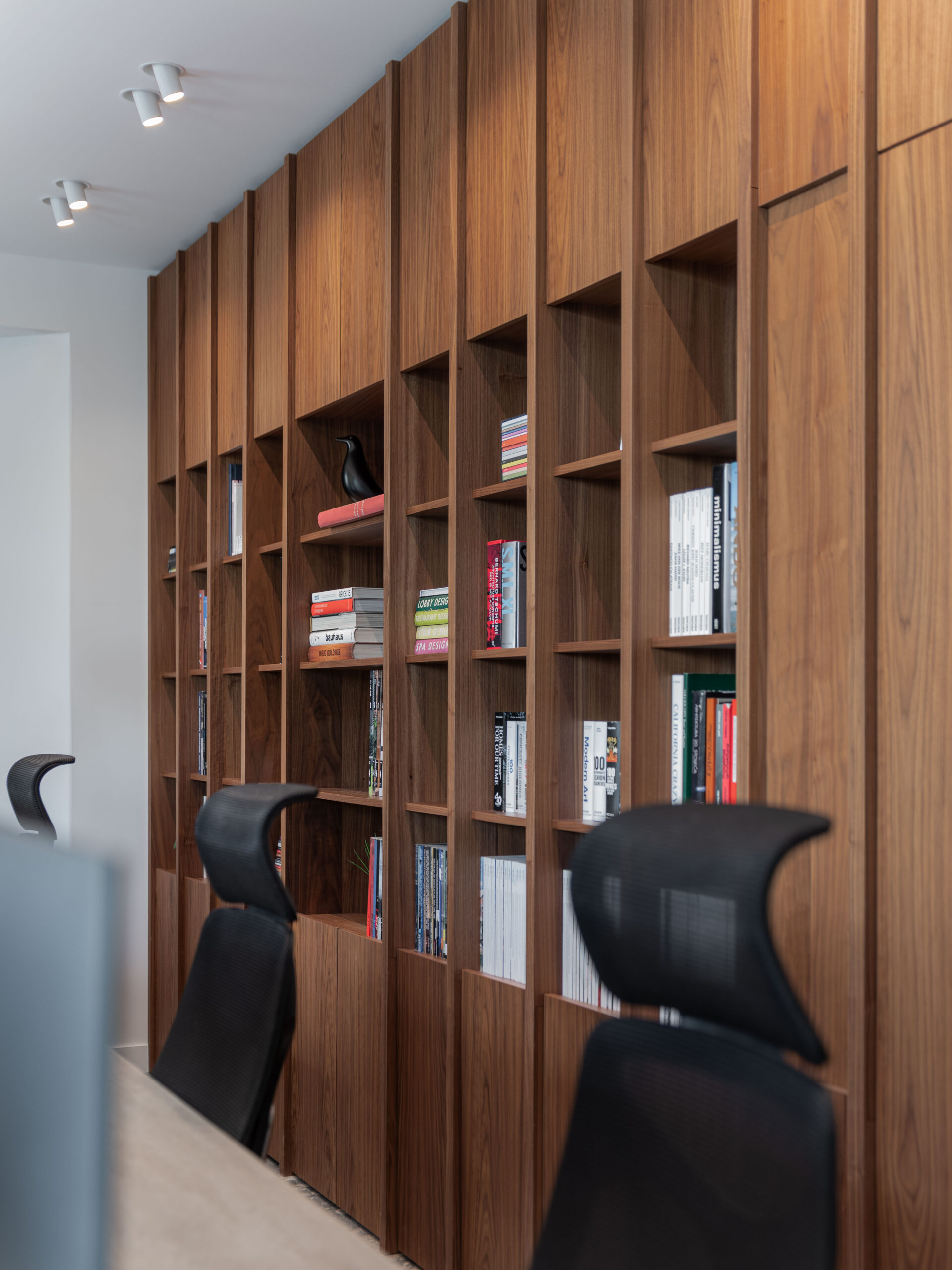
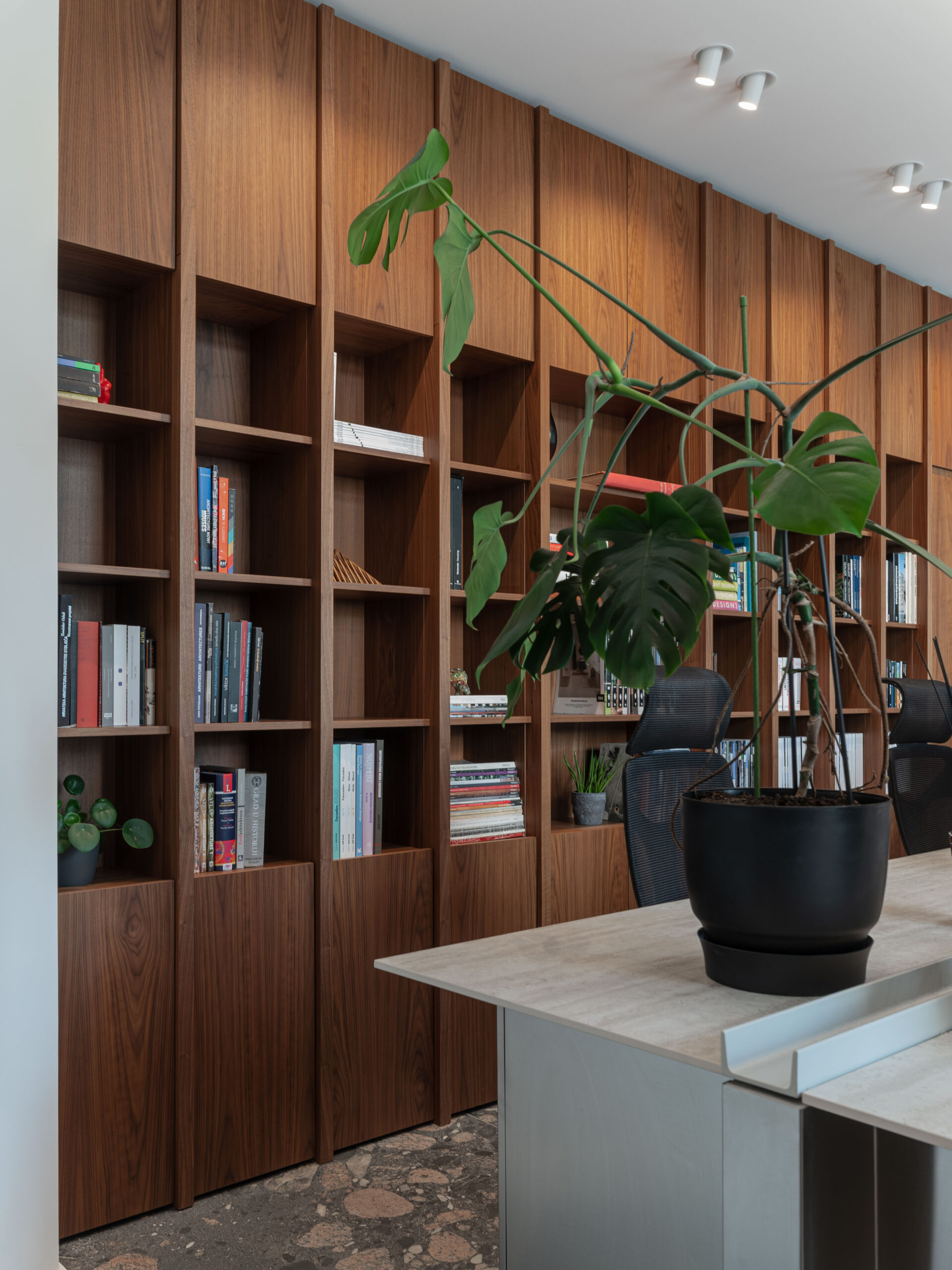
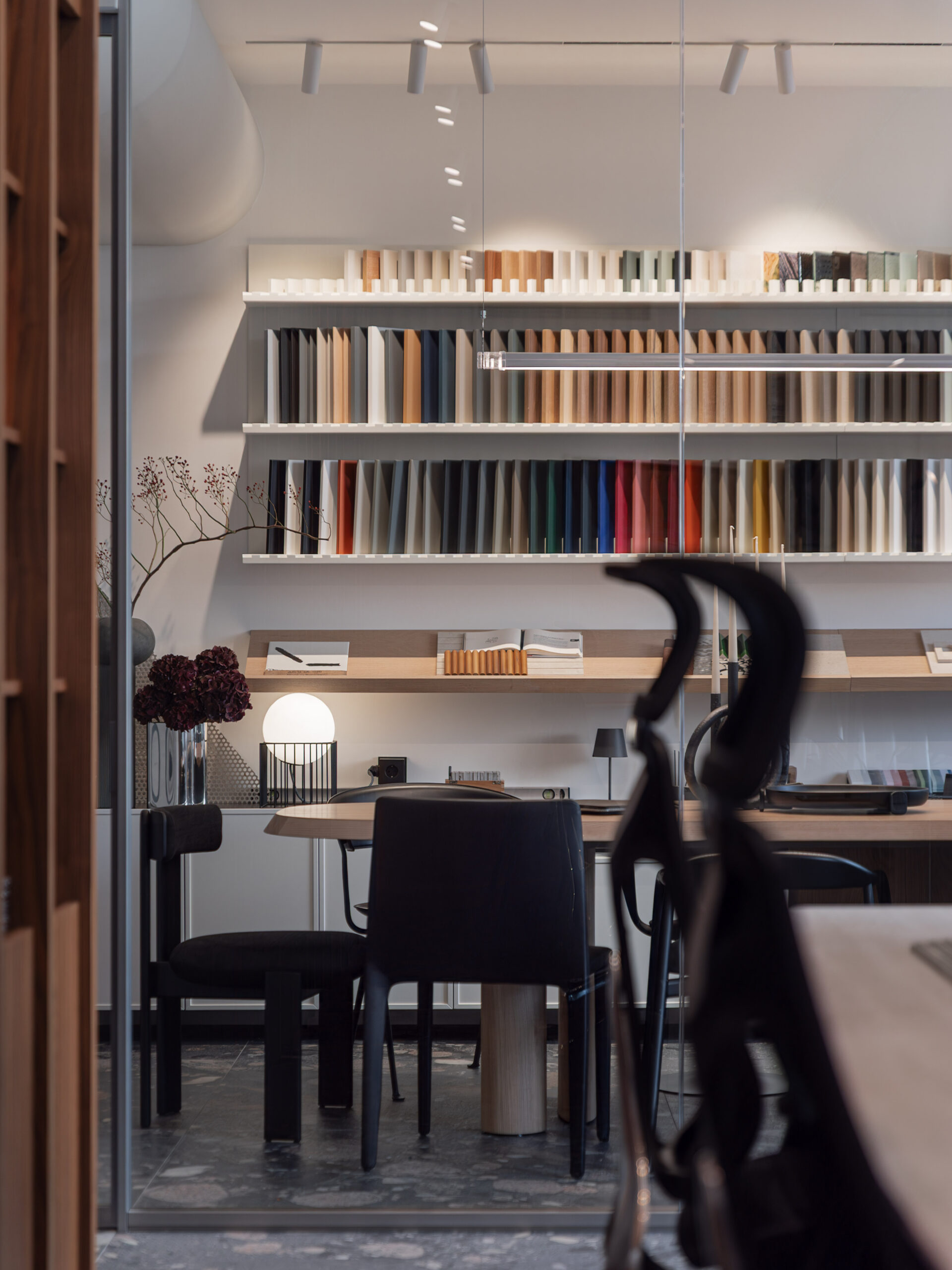
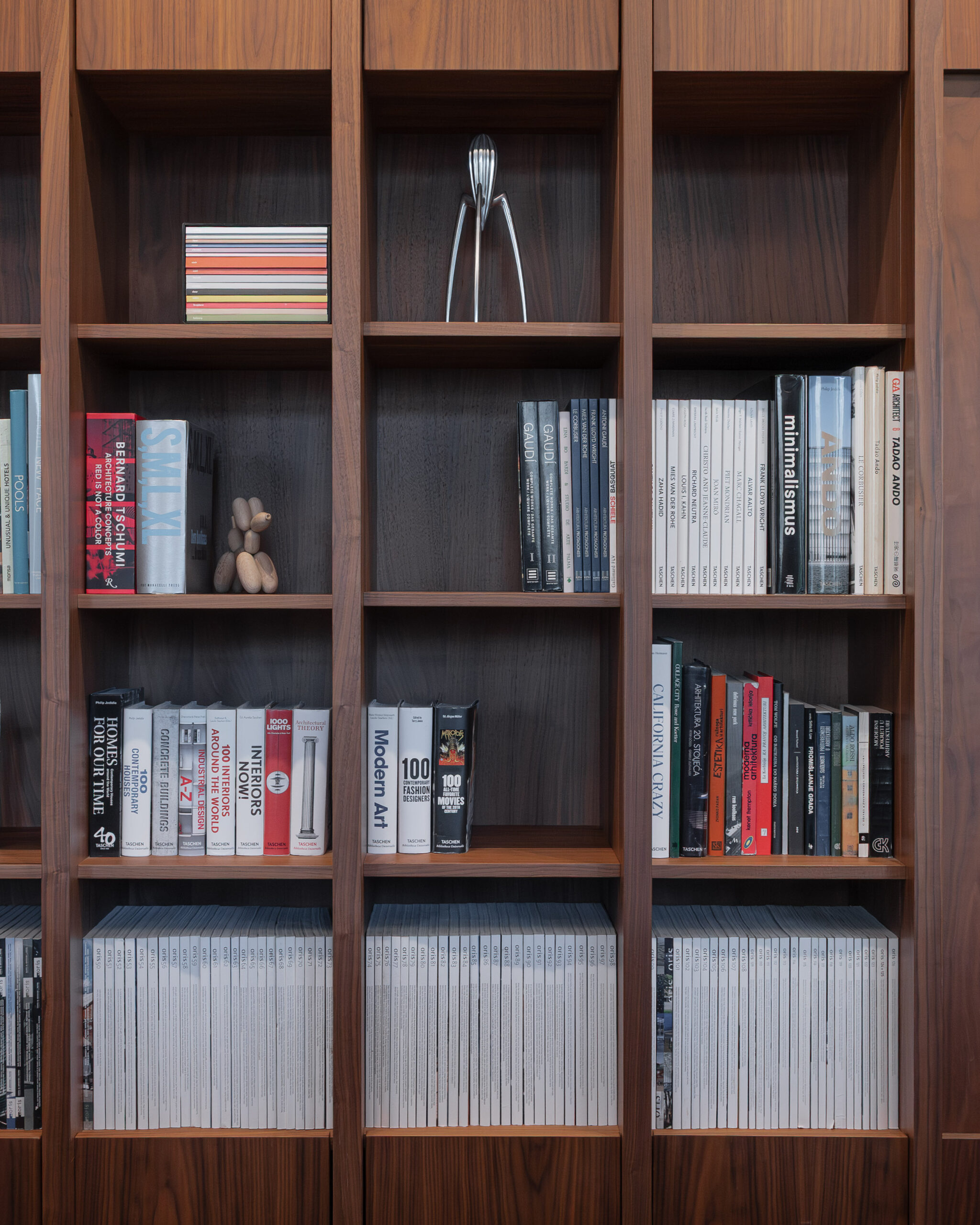
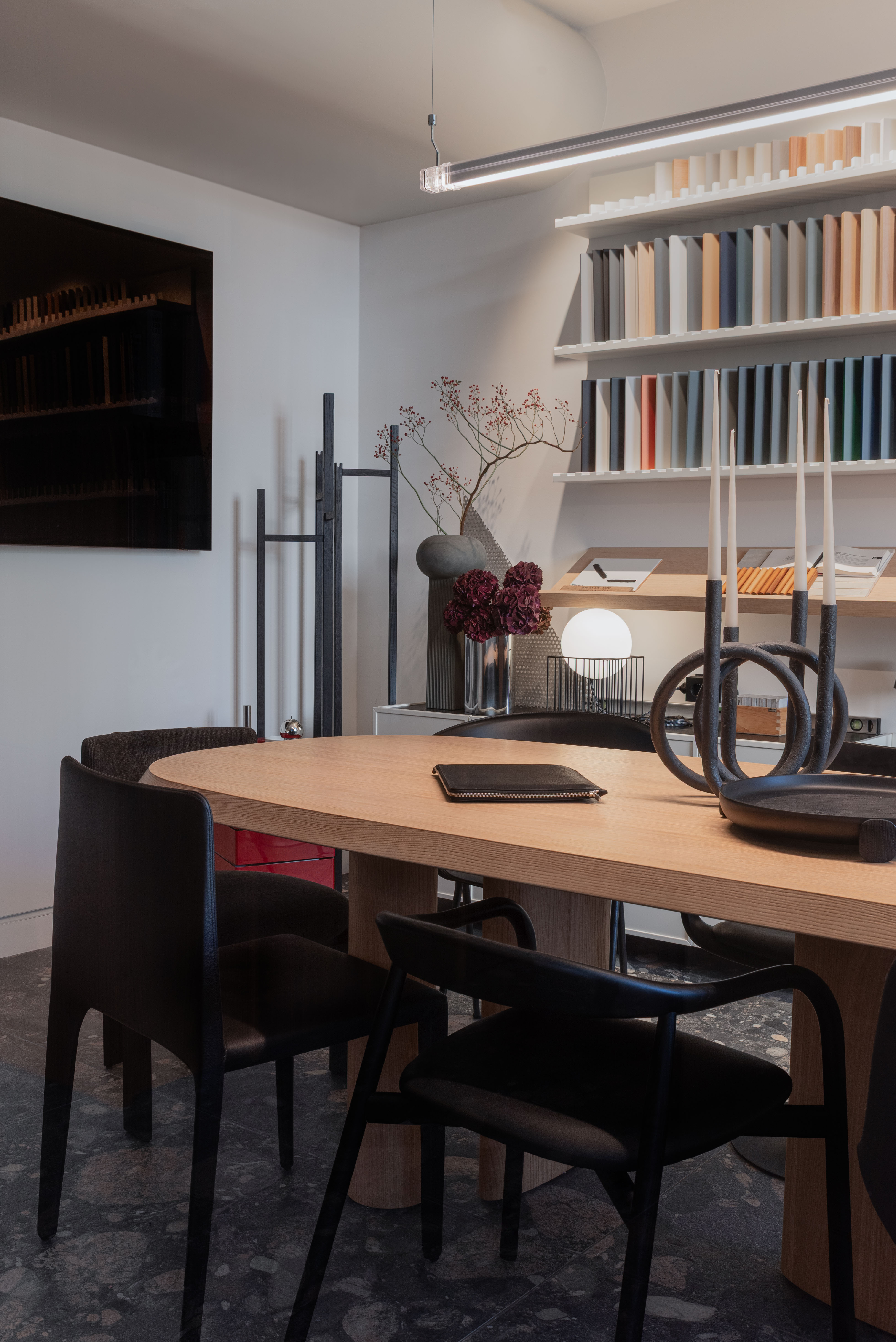
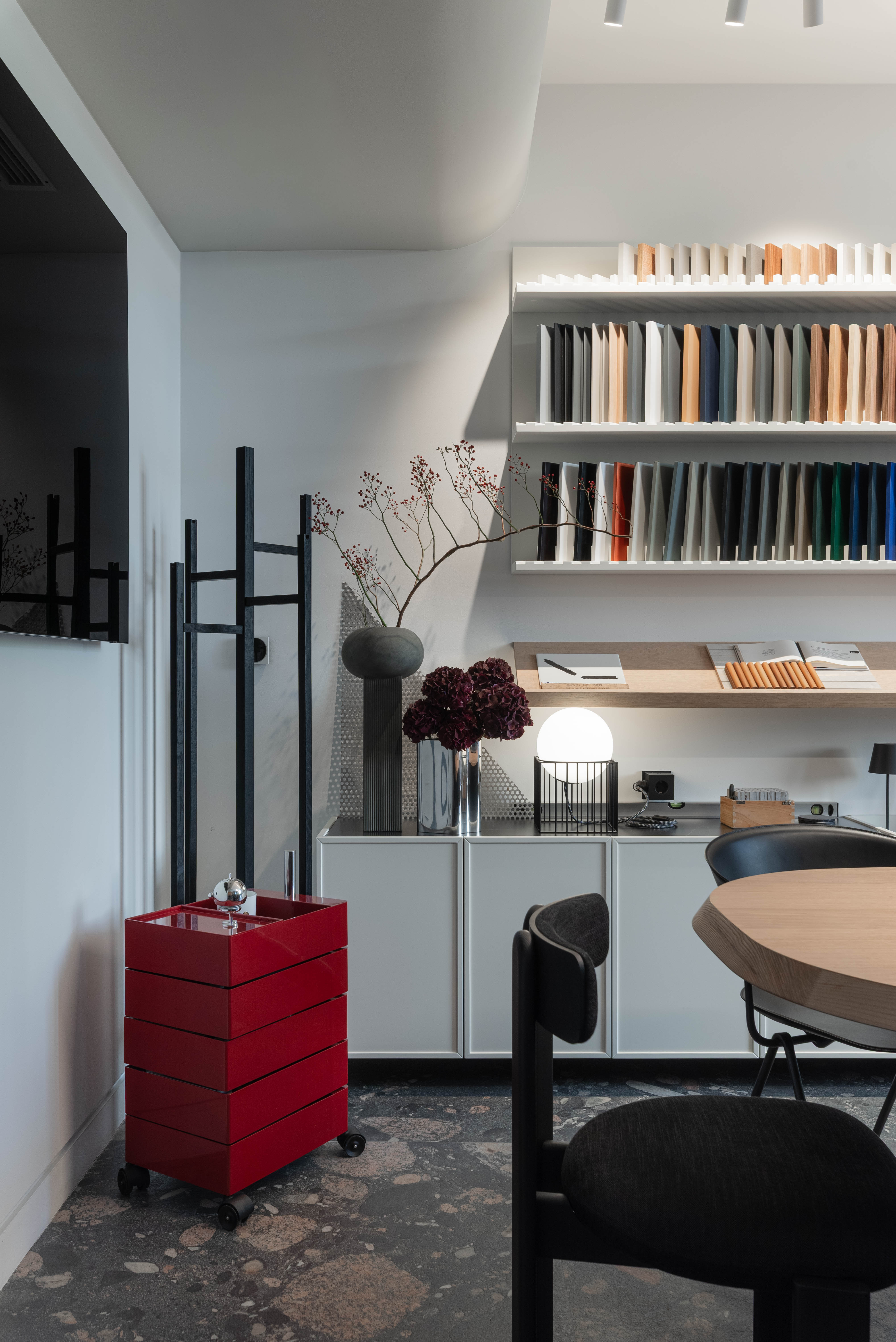
A library with architectural literature stretches along the wall opposite the glass wall - physically and content-wise the "memory" of the office. The extension of the desk leads to the conference room, where the contrast of materiality continues: the travertine of the desk contrasts with the warm oak table, which anchors and calms the space.
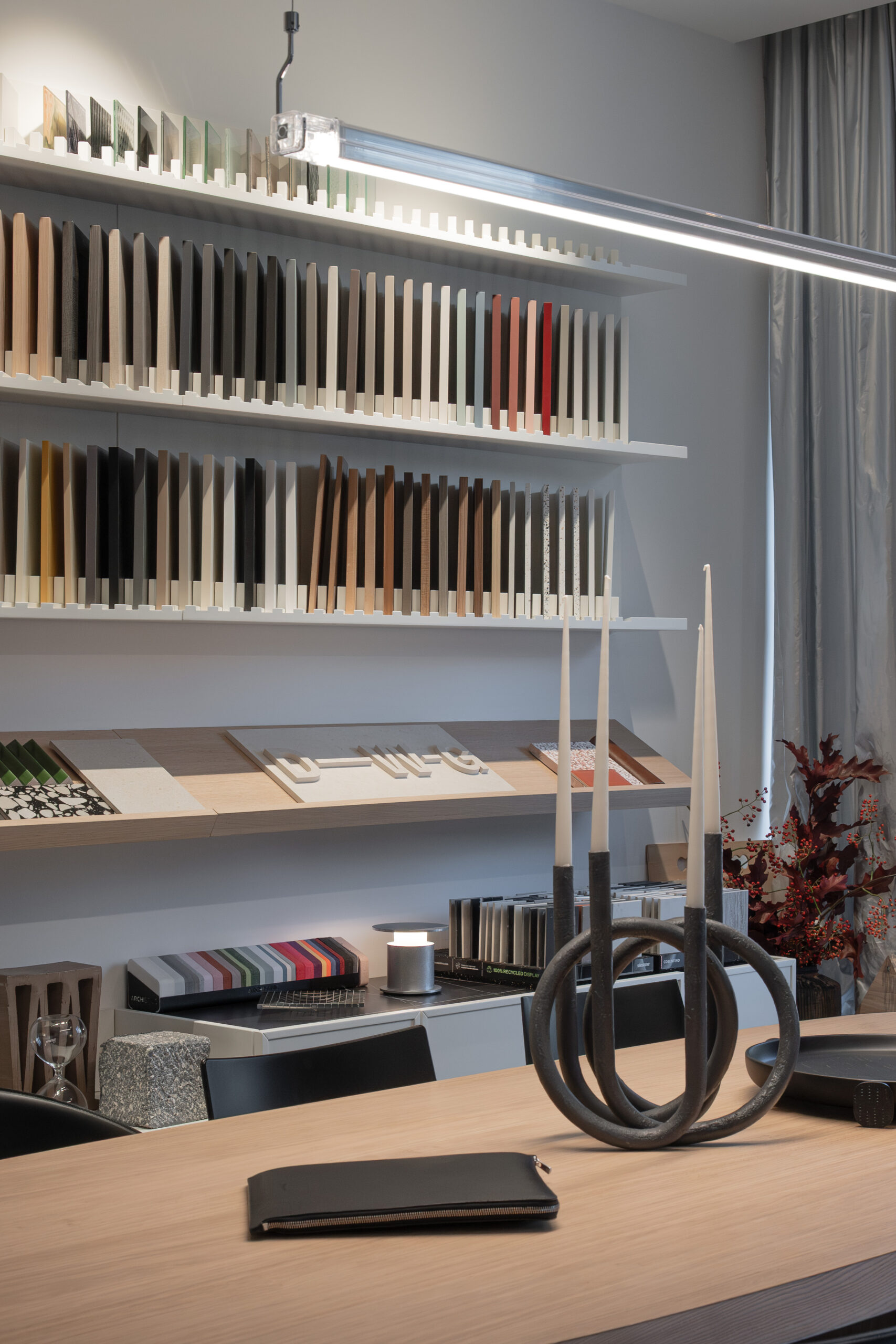
The material library, located next to the conference area, functions as a tactile archive – a gathering place for materials: wood, tiles, fabrics, stone, patterns and colors. The meeting table becomes a working platform for moodboards, concepts and presentations to investors.
Behind a hidden door are service areas – a kitchen and a toilet.
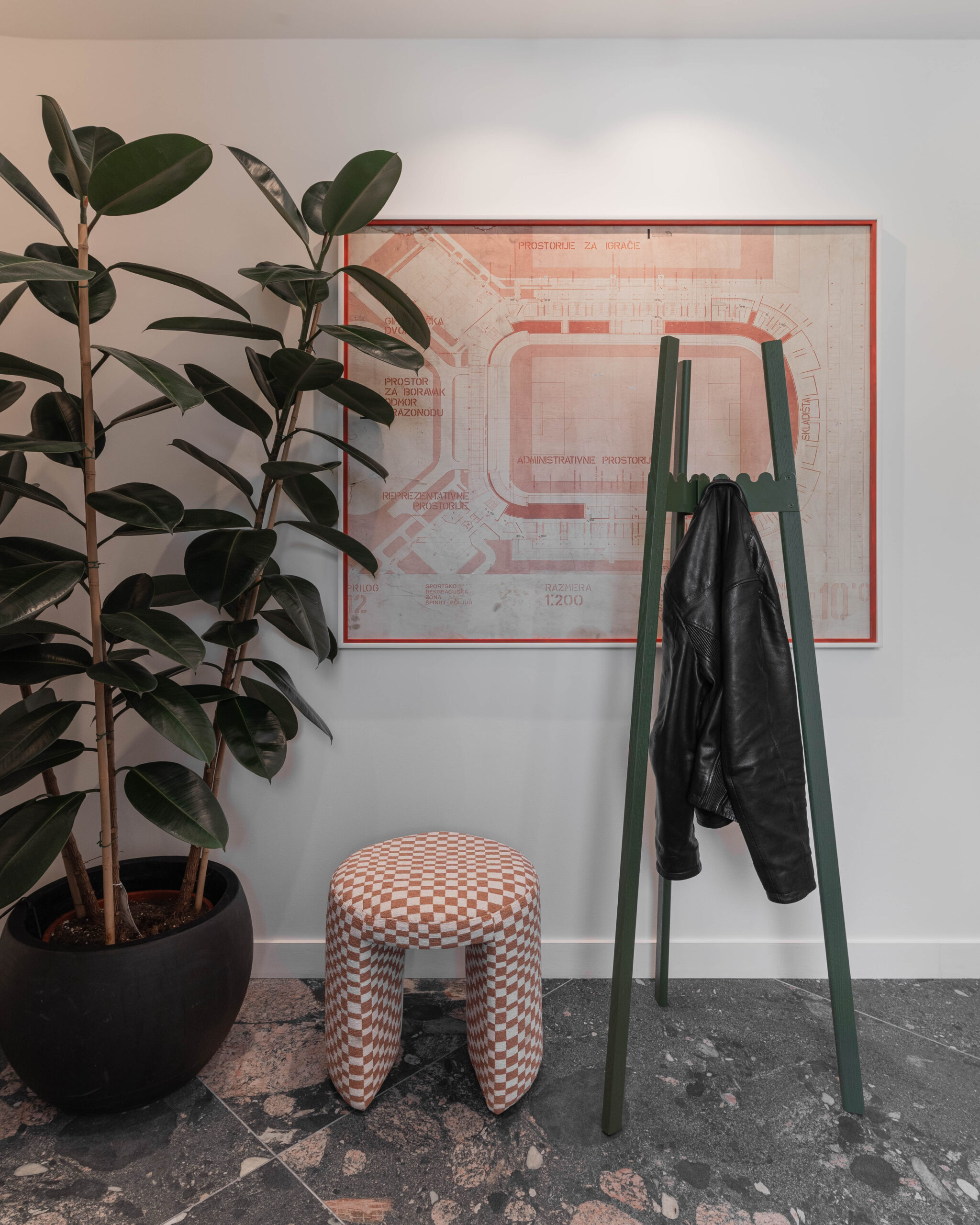
The kitchen, often an informal meeting place, is adorned with a painting by the artist Stanković, while selected art artifacts (Eames' bird, Starck's colander, Koons' balloon dog) are placed throughout the office, giving the space a layer of cultural and visual identity. A special place is occupied by the restored blueprint of the Poljud stadium from 1978, found on the construction site, now transformed into an artifact of architectural heritage.
This Split office is conceived as a complete ecosystem of architectural creation – a place of research, exchange, experimentation and presentation. Space, functions and materials together form the toolkit necessary for the articulation of contemporary architecture.